


A Pink Rescue Buoy costs R2,000 at ShopNSRI.com
Placed strategically on signs at selected inland rivers, dams and at beaches, these bright pink buoys act as a reminder to take care if there are no lifeguards on duty, and that in the event of someone getting into difficulty in the water, they can be used as emergency flotation until help arrives. Their bright pink colour allows them to be easily seen.
Each Pink Rescue Buoy is housed on a sturdy pole with signage showing how they should be used, as well as the NSRI’s emergency number and the buoy’s unique identification number, which helps rescue services to identify the location of the emergency. ID numbers and NSRI's contact telephone numbers are also embossed on the buoys themselves so they can easily be returned to their posts after usage, or if they are lost or stolen.
Watch the video below of how good samaritans battle the elements in race against time to save 2 fishermen with the help of a Pink Rescue Buoy.
The NSRI has three core Drowning Prevention programmes – Water Safety Education, Pink Rescue Buoys and Survival Swimming – and offers a range of free resources and educational materials.
Become a Pink Rescue Buoy Custodian
Since the project started in November 2017, over 1 900 Pink Rescue Buoys have been installed around South Africa and more than 190 lives have been saved through their use. This would not have been possible without the generous support of donors and sponsors, and buy-in from city councils, municipalities and communities around the country. We urge everyone to please take care of them, and report stolen buoys to us by calling 087 094 9774, or filling out the form below.


“Untrained people are going to the aid of someone who is in danger of drowning despite being advised not to. Our Pink Rescue Buoys use simple graphics to explain that it is safer to throw the float to someone and call the emergency number on the sign for help. But if someone does go into the water despite being advised not to, they have a very good chance of survival if they take flotation with them. In the rescues that we have recorded no rescuer was injured and all rescues were successful”
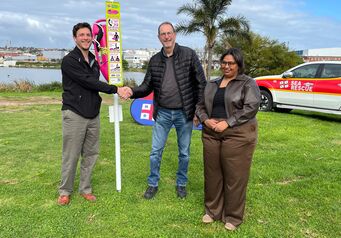
The NSRI has reached a new milestone in Nelson Mandela Bay, with the installation of the metro's first three Pink Rescue Buoys at high-risk points around North End Lake, marking the start of a drowning prevention drive for the area's inland waters.

On Tuesday, 12 May, NSRI volunteers from Station 42 Kleinmond rescued 23 stranded farm workers and their families, including babies, elderly residents and vulnerable individuals, during severe flooding between Worcester and Rawsonville.

A tragic drowning at Sodwana Bay has prompted renewed awareness around the importance of NSRI Pink Rescue Buoys (PRB) and the role communities can play in helping prevent future drownings.

When John Oldham heard about a tragic drowning at the small dam on the outskirts of McGregor village in December 2025, he was deeply moved to take action.

The NSRI has reached a significant milestone in its long-standing commitment to drowning prevention. By joining an international Public Rescue Equipment (PRE) working group, the NSRI is now part of a global effort to establish shared standards for life-saving equipment used by the public.

NSRI Kommetjie duty crew, NSRI Hout Bay duty crew and the CoCT (City of Cape Town) water rescue network were activated Friday 13 March following eyewitness reports of 2 teenagers appearing to be in distress in the surf zone at Kommetjie Beach, between Sunset Reef and Long Beach.


